
In This Article
You know the moment. You slide into the driver’s seat after a day in the sun, and your thighs file a formal complaint. Leather is gorgeous, but in July it’s basically a griddle with cupholders.

Choosing leather seat covers for hot climates is a different game from choosing them for Seattle. In an Arizona State University and UC San Diego study, cars parked in the sun for an hour averaged 116°F in the cabin. Seat surfaces reached about 123°F and dashboards about 157°F. Shade helped, but only so far: seats still averaged roughly 105°F.
So the real question isn’t “leather or not.” It’s which design lets the heat out instead of sealing it in. That means micro-perforations, smarter foam, lighter colors, and a heat reflective finish that actually does something.
I researched seven real, widely sold options across budget, mid-range, and premium tiers. I compared their specs, their materials, and the pattern in what buyers say. I haven’t personally driven with any of them, and I won’t pretend otherwise. What you get here is analysis: what the spec sheets mean, what reviewers keep repeating, and who each cover suits.
Along the way we’ll cover perforated leather seat covers for summer, why breathable leather seat covers for heat are more about holes than hides, and where faux leather durability holds up or quietly gives out under a brutal sun.
Quick Comparison: Best Leather Seat Covers for Hot Climates at a Glance
Here’s the cheat sheet. Prices are ranges based on what I saw during research, so check current price before buying.
| Product | Material & Cooling Feature | Price Range | Best For |
|---|---|---|---|
| Coverado Full Set | Perforated faux leather + high-resilience foam | Mid-$100s and up | Daily commuters wanting a premium look |
| FREESOO Nappa Set | Perforated Nappa-style leather, 20,000+ holes, lumbar pad | Mid-to-upper range | Long-haul drivers with back sweat |
| CAR PASS Leather Air Mesh | Faux leather + 3D air mesh panels | Mid-range | Drivers who put airflow first |
| MINGBRON Nappa Set | Nappa-style leather, waterproof backing | Mid-range | Families with spill-prone passengers |
| COVER EMPIRE Breathable Set | Perforated faux leather with lumbar/back pockets | Mid-range | Comfort-focused budget upgraders |
| FH Group Perforated PU | Perforated PU leather, waterproof, UV-resistant | Roughly $50–$65 for a full set | Cost-conscious full-car coverage |
| CAR GRAND Front Pair | Breathable faux leather, airbag compatible | Around $30–$40 | Budget front-seat refresh |
The table shows a clear split. Perforation-heavy designs (FREESOO Nappa Set, Coverado Full Set) are built to vent heat. The CAR PASS Leather Air Mesh swaps some leather surface for actual airflow channels. Budget picks like the CAR GRAND Front Pair give you a cooler-than-bare-vinyl experience for pocket change, but with fewer comfort extras.
If your commute is under 20 minutes, you can save money. If you’re logging hours in the sun, the perforated and mesh-assisted designs earn their keep.
💬 Just one click — help others make better buying decisions too!😊
Top 7 Leather Seat Covers for Hot Climates: Expert Analysis
Before the picks, one honest note. Ratings and review counts shift constantly across retailers. I’m summarizing the broad themes I could verify, not quoting individual reviewers. Where the review pool is thin, I say so. For a deeper look at how synthetic leather is made and why it behaves differently from hide, Wikipedia has a solid overview.
1. Coverado Full Set — premium look with real ventilation
The Coverado Full Set pairs perforated leatherette panels with high-resilience foam padding. Its standout trick is subtlety: the perforations are fine enough to stay nearly invisible at arm’s length, so you keep the luxe look without the “colander seat” vibe.
On paper, perforation plus dense foam means two things. Heat from your body has somewhere to go, and the cushion doesn’t compress into a sweaty slab on long drives. Based on the spec comparison, this is the design to beat if you want a full-car upgrade that looks factory.
Who’s it for? Daily commuters and families who want a coordinated front-and-rear set. Reviewers across retail listings tend to praise the fit and the premium appearance. The most common complaint with universal-fit sets generally is that they need patience during installation, and that holds here too. The rating I saw on one major retail listing sat in the mid-4-star range over a hundred-plus reviews, though I couldn’t verify a deeper corpus.
Pros:
- ✅ Fine perforations vent heat without looking cheap
- ✅ High-resilience foam resists sweaty compression
- ✅ Front-and-rear coverage for a cohesive interior
Cons:
- ❌ Universal fit means some tugging and adjusting
- ❌ Priced above entry-level sets
Price range: mid-$100s and up for a full set; check current price. Value verdict: strong for heavy daily use, overkill for a weekend car.

2. FREESOO Nappa Set — 20,000+ perforations for long drives
If there’s a “spec flex” in this category, it’s the 20,000-plus perforation count on the FREESOO Nappa Set. That number matters because airflow is about open area. More small holes spread evenly means more places for trapped heat and moisture to escape from where your back and thighs meet the seat.
It also adds an ergonomic lumbar pad, which is the sleeper feature. In hot weather, a pad that props you slightly off the seat back creates a small air gap. That’s the same principle behind those beaded driver cushions, just built in.
What the spec sheet won’t tell you, but user reports suggest, is that Nappa-style finishes feel softer than most budget faux options. Buyers on long highway runs tend to favor it. The caveat: “Nappa” here describes a finish style on synthetic or coated material, so don’t expect genuine hide durability.
Pros:
- ✅ Huge perforation count boosts airflow
- ✅ Lumbar pad creates a small cooling air gap
- ✅ Soft Nappa-style surface for long drives
Cons:
- ❌ Synthetic base, so not true hide
- ❌ Dark colors still run warm in direct sun
Price range: mid-to-upper range; check current price. Value verdict: best pick for road-trippers and sweaty-back sufferers.
3. CAR PASS Leather Air Mesh — airflow-first hybrid design
The CAR PASS Leather Air Mesh doesn’t try to make leather breathe. It admits leather has limits and adds 3D air mesh panels where your body presses hardest. That’s honest engineering, and it’s why this set appears on several summer roundups.
The spec set includes faux leather outer edges, 5mm sponge padding, 3D cool mesh polyester, and an anti-slip backing. In practice, mesh lets air move through the seat surface rather than merely around the perforations. Summer-focused reviewers often place it near the top for heat, and it’s a smart choice for open-air vehicles like Jeeps.
The trade-off is aesthetics. It looks sportier than a pure leather set, and anti-slip backing can feel a bit grippy on cloth seats. If you want a showroom look, you’ll want a different pick. If you want to feel cooler on the first minute of your drive, this is it.
Pros:
- ✅ Mesh panels provide true through-flow ventilation
- ✅ 5mm padding adds comfort on rough roads
- ✅ Anti-slip backing keeps it planted
Cons:
- ❌ Looks sportier than pure leather styling
- ❌ Mesh needs occasional crumb vacuuming
Price range: mid-range; check current price. Value verdict: arguably the best cooling per dollar here.
4. MINGBRON Nappa Set — waterproof backing for messy lives
The MINGBRON Nappa Set targets families. Its Nappa-style leatherette comes with waterproof backing and a multi-piece rear set, which matters when juice boxes and wet dogs travel with you.
Waterproofing is a double-edged sword in hot climates. It protects your seats from spills, but any sealed backing can reduce how well heat leaves the cushion. My read: this is the right call if spills, not sweat, are your top problem. If perforation is your priority, the FREESOO Nappa Set or Coverado Full Set do more for ventilation.
Reviewers on retail listings commonly praise protection and easy wipe-downs. Typical gripes around universal sets concern fit, particularly around seat-belt receptacles. It’s also the one I’d lean toward if you’d like a more neutral-looking cover that doesn’t scream “aftermarket.”
Pros:
- ✅ Waterproof backing handles spills and pets
- ✅ Multi-piece rear set covers the whole bench
- ✅ Wipes clean in seconds
Cons:
- ❌ Sealed backing limits heat release
- ❌ Fit can be fussy on unusual seat shapes
Price range: mid-range; check current price. Value verdict: great for family hauling, average for pure cooling.
5. COVER EMPIRE Breathable Set — lumbar pockets without the premium bill
The COVER EMPIRE Breathable Set pairs breathable perforations with back pockets and lumbar-style contouring. It’s one of the more comfort-minded entries below the premium tier.
The back pockets are the clever part. They help the cover wrap the seat back more securely, reducing the bunching that traps heat in wrinkles. In a hot cabin, that sounds like a small detail, but a flat, tight cover breathes better than a slouchy one.
Who should consider it? People who want a comfort upgrade, not a showpiece. Based on the spec comparison, you’re trading some of the premium foam density of the Coverado Full Set for a gentler price. Reviewers broadly describe it as comfortable, with the usual universal-fit caveats. I couldn’t verify a large independent review sample, so treat it as a solid mid-tier candidate rather than a proven champion.
Pros:
- ✅ Breathable perforations on contact areas
- ✅ Back pockets keep the cover snug
- ✅ Comfort-focused contouring for commutes
Cons:
- ❌ Thinner verified review pool
- ❌ Foam less dense than premium rivals
Price range: mid-range; check current price. Value verdict: good value if you want comfort without paying for a brand name.
6. FH Group Perforated PU Leather — full-car coverage on a tight budget
FH Group is one of the best-known names in universal seat covers, and its perforated PU leather line brings a centered perforated panel in a package that includes headrest covers. The material is polyurethane leather, which is lighter on the wallet than premium Nappa-style sets.
Here’s the analysis: a central perforated panel helps where you sit most, while the side bolsters stay solid for a cleaner look. That’s smart cost engineering. It also means ventilation is more limited than on the FREESOO Nappa Set, which perforates much more of the surface.
The listings highlight waterproofing and UV resistance. Both help with sun exposure, though no cover is UV-proof forever. The retail ratings I found for specific listings were sparse, so I’d treat this as a budget buy to keep expectations realistic, not a long-term investment.
Pros:
- ✅ Full-set value with headrest covers included
- ✅ Perforated center panel where heat builds
- ✅ UV-resistant and waterproof claims for sun exposure
Cons:
- ❌ Limited perforation compared with premium sets
- ❌ Sparse verified review data
Price range: roughly $50–$65 for a full set; check current price. Value verdict: fair for budget buyers and secondary vehicles.
7. CAR GRAND Front Pair — cheapest way to stop front-seat suffering
The CAR GRAND Front Pair covers only the front seats in breathable faux leather, and that’s exactly its charm. If your back seats carry occasional luggage and not passengers, why pay for a whole set?
The cover is airbag compatible and universal fit, with a rating around 4 stars over several hundred reviews on a major retail listing. That rating suggests it satisfies more people than it frustrates, but “satisfied at this price” isn’t the same as “premium durable.” Expect it to be fine for a daily driver and to show wear sooner than a thicker set.
What stands out: you’re getting basic breathability for roughly the price of a nice lunch. Spend more and you get thicker foam and better ventilation. Spend this and you get a cooler seat than bare vinyl, plus protection.
Pros:
- ✅ Front-only coverage keeps cost low
- ✅ Airbag-compatible design
- ✅ Solid satisfaction at a rock-bottom price
Cons:
- ❌ Thinner material shows wear sooner
- ❌ Rear seats are left uncovered
Price range: around $30–$40; check current price. Value verdict: the sensible entry point.
Now for a side-by-side scorecard of all seven.
| Product | Cooling Strategy | Durability Outlook | Best For |
|---|---|---|---|
| Coverado Full Set | Fine perforations + foam | Good for faux | Premium daily drivers |
| FREESOO Nappa Set | 20,000+ perforations + lumbar | Good | Long-haul comfort |
| CAR PASS Leather Air Mesh | 3D mesh panels | Moderate | Heat-first buyers |
| MINGBRON Nappa Set | Nappa-style finish | Good | Families |
| COVER EMPIRE Breathable Set | Perforations + contouring | Moderate | Comfort on a budget |
| FH Group Perforated PU | Center perforated panel | Moderate | Full-car budget |
| CAR GRAND Front Pair | Basic breathable panel | Basic | Front-seat budget |
Reading this table, the CAR PASS Leather Air Mesh and FREESOO Nappa Set lead on pure cooling logic, while the Coverado Full Set wins on balanced premium feel. If I had to pick one for scorching climates, I’d choose the mesh-assisted or high-perforation designs. The CAR GRAND Front Pair wins on cost, but you’ll feel the trade-offs by year two.
How To Install And Maintain Your Covers For Maximum Cooling
A cover that bunches up is a cover that traps heat. Installation matters more than most people expect, and a few habits stretch the life of everything on the list.
- Warm the covers first. Faux leather stretches better when it’s warm. Leave the cover in a sun-warmed room for 15–20 minutes before you start.
- Remove the headrests and seat-back bolts when allowed. Tension from the back panel keeps the cover flat, which helps airflow.
- Tuck, don’t force. Use the included straps and hooks, but don’t over-tighten around airbag seams. Side-airbag seats need compatible designs, and the CAR GRAND Front Pair and many FH Group sets advertise exactly that.
- Smooth wrinkles after the first drive. Heat and body weight will settle the foam. Re-tighten after a week.
For maintenance, a simple monthly routine works. Wipe with a damp microfiber cloth, then dry thoroughly. Avoid harsh solvents, which can strip coatings and speed cracking. Vacuum perforations occasionally so crumbs don’t clog the airflow you paid for. Finally, a sunshade does more for any seat cover than any extra feature.
Common first-30-day mistakes include over-tightening straps (which stretches seams), skipping the post-install adjustment, and cleaning with all-purpose sprays. Do the boring stuff and your cover will outlast the one you ignore.
Real-World Scenarios: Matching Covers To Real Drivers
Three drivers, three budgets, three answers.
The Phoenix commuter. She drives 30 miles each way and parks outside all day. Seat surface temps hit triple digits before she’s even buckled in. Her best match is the FREESOO Nappa Set or CAR PASS Leather Air Mesh, because ventilation matters more than aesthetics. She should add a reflective windshield shade, and a lighter color if the interior allows.
The Houston family. Two kids, a dog, and sticky humidity. Spills matter as much as heat. The MINGBRON Nappa Set fits best, thanks to waterproof backing and a multi-piece rear. He’ll accept slightly less airflow in exchange for easy wipe-downs, and he can offset it with a seat-back fan or by parking in shade when possible.
The college student with a hand-me-down sedan. Budget is tight, the car is old, and she only drives short hops. The CAR GRAND Front Pair or FH Group Perforated PU gives her real protection without a loan. She should plan on replacing in a couple of years and treat it as a seasonal fix.
The pattern across all three is the same. Match the cover to your biggest pain point, whether that’s sweat, spills, or budget. Then build the rest of the cooling plan around it.
Problem → Solution: Fixing Common Hot-Seat Headaches
Problem: “My thighs stick to the seat.” That’s moisture trapped by a non-breathable surface. Solution: choose perforated or mesh-panel covers like the Coverado Full Set or CAR PASS Leather Air Mesh, and wear lighter fabrics.
Problem: “The seat burns when I get in.” Surface temperature is the culprit. Solution: lighter cover colors, a windshield shade, and cracking windows slightly. The National Weather Service found a dark interior heats up much faster than a light one.
Problem: “My cover looks wrinkled and baggy.” Wrinkles trap heat. Solution: re-tighten after a week, and consider the COVER EMPIRE Breathable Set with back pockets for a snugger fit.
Problem: “Cracking and fading after one summer.” Solution: wipe regularly, avoid harsh cleaners, and use a UV-protectant approved for synthetic leather. If you’re on a budget, expect a shorter lifespan from the FH Group Perforated PU or CAR GRAND Front Pair.
Problem: “My ventilated seats stopped cooling.” Solution: only cover with perforated designs, and avoid sealed backings that block airflow.
What Are Leather Seat Covers For Hot Climates?
What are leather seat covers for hot climates? They’re seat covers made from leather or leather-look material, engineered to shed heat and moisture rather than trap it. Typical features include micro-perforations, breathable foam, mesh panels, and lighter finishes. They protect upholstery while reducing the sticky, scorching feel of ordinary leather in summer.
That definition matters because plain leather is a heat sponge. Genuine leather is a natural hide, and its tight grain doesn’t ventilate well. That’s why nearly every “cool” option in this guide is a perforated or mesh-assisted synthetic design rather than hide.
How To Choose Leather Seat Covers For Hot Climates
Use this checklist, in order.
- Check the perforation coverage. More open area equals better airflow. The FREESOO Nappa Set‘s high hole count is a good benchmark.
- Look at the backing. Mesh or breathable foam beats sealed waterproof backing for heat.
- Pick a lighter color if possible. Lighter surfaces absorb less solar energy.
- Verify airbag compatibility. Side-airbag seats need designs with breakaway seams or tested construction.
- Match fit to seat style. Bucket seats, bench seats, and split-fold rears all need different cuts.
- Think about cleaning. Perforations hold dust, so check how easily the cover vacuums or wipes.
- Weigh durability against price. Cheaper covers usually mean thinner coatings, so plan replacement cycles.
If you only remember one rule, remember this: breathable beats pretty when it’s 105°F.
Perforated Leather Seat Covers For Summer: What The Holes Actually Do
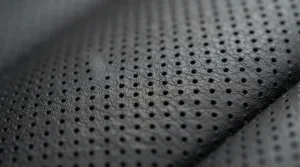
Let’s talk about perforated leather seat covers for summer, because the marketing around holes can get silly. Perforations don’t air-condition anything. What they do is let moisture vapor and warm air move away from your skin and into the cushion, where it can disperse.
The effect is strongest when the foam underneath is also breathable. That’s why designs like the Coverado Full Set and CAR PASS Leather Air Mesh emphasize both layers. Perforations on top of a sealed, waterproof backing do less than the brochure suggests.
Hole size and spacing matter too. Tiny, dense perforations keep a clean look and give consistent airflow. Larger, sparse holes look sportier but leave more solid leather to cook. And if your car has factory ventilated seats, perforated covers are the only type that lets that built-in system keep working.
One more honest note: perforated leather won’t make a 130°F cabin feel cool. It makes the seat less swampy and the heat more bearable. Think relief, not refrigeration.
Breathable Leather Seat Covers For Heat: Mesh, Foam, And Fabric Blends
Breathable leather seat covers for heat come in three flavors. Perforated leatherette lets air move through holes. Mesh-hybrid designs like the CAR PASS Leather Air Mesh replace part of the surface with open weave. And foam-forward sets use airy padding to reduce heat buildup.
Pure mesh is generally the coolest, but it gives up the leather look. Perforated leather splits the difference. If you want the best balance, a hybrid with leatherette bolsters and mesh centers gets you most of the cool and most of the style.
The takeaway: ask what’s under the surface, not just what’s on top. A breathable top over a sealed foam block is a half-measure.
Heat Reflective Finish: Marketing Or Meaningful?
A heat reflective finish sounds like science. Sometimes it is, and sometimes it’s a shimmer. The idea is simple: lighter or reflective coatings send more sunlight away instead of absorbing it, so the surface stays cooler to the touch.
Be skeptical of vague claims. A truly useful heat reflective finish shows up as a lighter color or a specific coating described by the manufacturer. I couldn’t verify independent lab data for the iridescent or “reflective” finishes on some universal sets, so treat those claims as unproven. Even without lab numbers, physics helps you: pale beige and gray finishes run cooler than black in the same sun.
So what should you do? Choose lighter tones when your interior allows. Use a windshield shade for the real heavy lifting, and let a heat reflective finish be a bonus, not a plan. Perforation and airflow do more for comfort than any shimmer.
Faux Leather Durability In Extreme Heat
Faux leather durability is the elephant in the sunroof. Most covers on this list use polyurethane or PVC-based coatings, and those can crack, peel, or stiffen with years of UV exposure and thermal cycling. Bonded leather, made from shredded scraps glued together, is generally considered the weakest for hot climates.
How long can you expect? That depends on quality, sun exposure, and care. Premium sets such as the Coverado Full Set use thicker coatings and denser foam, and they tend to age better than budget picks. Entry-level options like the CAR GRAND Front Pair may show wear sooner, particularly on high-friction bolsters.
Here’s how to stretch it. Park in shade when you can. Use a UV-protectant designed for synthetic surfaces. Avoid solvent cleaners. And accept that faux leather durability is a “years” proposition, not a “decades” one. If a cover gets you three good summers, it did its job.
Leather Seat Covers vs. Other Materials For Hot Weather
| Material | Heat Behavior | Durability | Best For |
|---|---|---|---|
| Perforated faux leather (e.g., Coverado Full Set) | Moderate, vents moisture | Good | Style plus cooling |
| Mesh hybrid (e.g., CAR PASS Leather Air Mesh) | Best airflow | Moderate | Max cooling |
| Neoprene | Retains body heat | High | Water exposure |
| Solid vinyl/PU | Runs hot | Moderate | Easy cleaning |
| Fabric | Cool initially | Moderate | Sweat absorption |
Looking at the table, mesh and perforated designs clearly beat solid vinyl and neoprene for comfort in the heat. Neoprene’s foam core stores warmth, which is why it shines in boats and trucks but struggles in desert commutes. Fabric feels cool at first but soaks up sweat, so it’s a trade-off.
If you want leather styling without sacrificing too much airflow, perforated faux leather is the sweet spot. If cooling is the only goal, mesh wins. Choose based on what you’d regret more: a hot seat or a plain one.
Common Mistakes When Buying Leather Seat Covers For Hot Climates
Buying solid leatherette because it looks premium. It looks great in the listing photo and cooks in the driveway. Perforations aren’t optional here.
Ignoring the backing. Waterproof is wonderful until it blocks airflow. Balance protection against ventilation.
Skipping airbag compatibility. This is a safety issue, not a style choice. Always confirm the cover supports side-airbag deployment.
Choosing dark colors in a sunny state. Black looks sharp and runs hot. Lighter tones help.
Trusting “universal fit” blindly. Measure your seats and compare with sizing notes. A loose cover bunches and traps heat.
Overlooking returns. Fit varies, so buy from a seller with a clear return policy.
Long-Term Cost And Maintenance: What You’ll Really Spend
Total cost of ownership is where cheap covers can surprise you. Say a budget set lasts two summers and a premium set lasts four. The “expensive” one can end up cheaper per year, plus it holds up better visually.
Here’s a quick framework. A budget front pair like the CAR GRAND Front Pair costs little up front but may need replacement sooner. A mid-tier set like the MINGBRON Nappa Set or COVER EMPIRE Breathable Set sits in the middle on both cost and lifespan. A premium set like the FREESOO Nappa Set or Coverado Full Set costs more now and often less per year.
Add maintenance: cleaning supplies, UV protectant, and maybe a replacement every few years. These costs are small, but they compound. Honest advice: if you plan to keep your car beyond three years, move up one tier.
Safety, Airbags, And Hot-Car Reality Checks
Two safety topics deserve space. First, airbags. Side airbags deploy from the seat, so any cover must allow clean deployment. Look for explicit airbag-compatible labeling, like that on the CAR GRAND Front Pair, and avoid DIY alterations.
Second, hot-car dangers. The National Weather Service reports that most of a car’s heat rise happens in the first 30 minutes, and that cracking a window makes very little difference. Seat covers improve comfort, but they don’t make a hot car safe. Never leave children or pets in a parked vehicle, even briefly.
Practical habits help: use a windshield shade, check the back seat every time you park, and let the cabin vent before you buckle kids in. Seat surfaces can be hot enough to burn skin, so test with the back of your hand first.

FAQ
❓ Do perforated seat covers really keep you cooler?
❓ Are leather seat covers too hot for Arizona or Texas summers?
❓ How long does faux leather last in extreme heat?
❓ Will seat covers block my heated or ventilated seats?
❓ Which color seat cover stays coolest in direct sun?
Conclusion: Cool Seats Are A Design Choice
The lesson of all this is simple. Leather seat covers for hot climates work when they’re designed to breathe, not just to look good. Perforations, mesh panels, breathable foam, and lighter colors each take a small bite out of the heat, and together they add up.
If I were choosing for a hot, sunny commute, I’d start with the FREESOO Nappa Set or CAR PASS Leather Air Mesh for airflow, then consider the Coverado Full Set for a premium full-car look. Families should lean toward the MINGBRON Nappa Set, and budget shoppers can start with the COVER EMPIRE Breathable Set, FH Group Perforated PU, or CAR GRAND Front Pair, with realistic expectations about lifespan.
Remember the fine print: faux leather durability depends on care, a heat reflective finish is a bonus and not a miracle, and no cover makes a parked car safe. Protect your seats, protect your comfort, and always check the back seat.
✨ Ready for cooler drives? 🔍 Pick the cover that fits your climate, your car, and your budget, then click through to check current pricing and availability. Your thighs will thank you! 🚗❄️
Recommended for You
- Neoprene Seat Covers for Beach and Surf Days: 7 Proven Picks 2026
- Custom Fit Seat Covers for Trucks with Bucket Seats: 7 Best 2026
- Universal Seat Covers for Rideshare Drivers: 7 Proven Picks 2026
Disclaimer: This article contains affiliate links. As an Amazon Associate, I earn from qualifying purchases. If you purchase products through these links, we may earn a small commission at no additional cost to you.
✨ Found this helpful? Share it with your friends! 💬🤗
