
In This Article
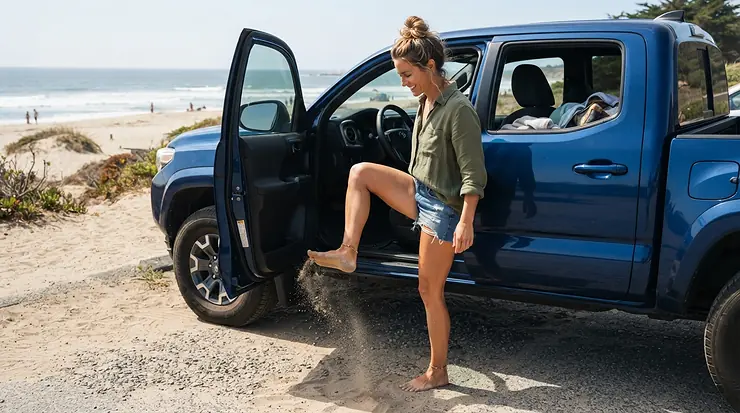
Neoprene seat covers for beach and surf days are slip-on seat protectors made from the same closed-cell synthetic rubber foam used in wetsuits. They block water, sand, sunscreen and salt from soaking into your upholstery, then wipe or rinse clean afterward. They turn a damp, sandy post-session drive into a non-event.
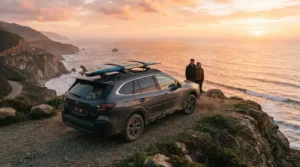
Picture the scene. Dawn patrol is over, the waves were glorious, and you’re peeling yourself out of a half-zipped wetsuit in a parking lot. Your seat is about to take a hit. Salt water, a fine coat of sand, a smear of reef-safe sunscreen. Cloth seats drink all of it in. Leather cracks. Foam cushions turn into a slow-motion science experiment that you will smell by August.
That’s the problem this guide solves. Based on a deep comparison of real specs, manufacturer claims and aggregated reviewer sentiment, here’s what to weigh before you buy.
You’ll find seven real products across budget, mid-range and premium tiers, plus the stuff the listings skip: how the layers actually differ, what salt does to rubber over time, and how to rinse your covers so they last. Prices below are ranges as of late 2026, so always check current pricing before you buy.
Quick Comparison: Neoprene Seat Covers for Beach and Surf Days at a Glance
Before the deep dive, here’s the field on one screen. Think of it as the lineup photo before the interrogations.
| Product | Fit Type | Price Range | Neoprene Build | Best For |
|---|---|---|---|---|
| Wet Okole Neoprene Seat Covers | Custom or universal | $300-$550 range | Nylon-bonded CR neoprene | Wet Okole: daily surfers who want a premium, tailored fit |
| Coverking CR-Grade Neoprene Custom Seat Covers | Vehicle-specific | $300-$350 range (front row) | CR neoprene inner layer, Neotex shell | Coverking: a glove-tight fit with a two-year warranty |
| Rough Country Neoprene Seat Covers | Vehicle-specific (trucks) | Around $250 range | 5mm neoprene | Rough Country: Silverado and Sierra owners in coastal areas |
| Gorla Gear Premium Universal Neoprene Seat Cover | Universal | $40-$60 per seat range | Waterproof neoprene, non-slip backing | Gorla Gear: all-round value across vehicles |
| CAR PASS Neoprene EVA Front Seat Covers | Universal (front pair) | Under $60 range | Neoprene with 5mm EVA padding | CAR PASS: budget buyers who want padding |
| Motor Trend AquaShield Front Seat Covers | Universal (front pair) | $25-$40 range | Neoprene foam lining | Motor Trend AquaShield: occasional beach days on a tight budget |
| CAROMOP Neoprene Waterproof Seat Covers | Universal (full set) | Around $50 range | Polyester and neoprene blend | CAROMOP: families who need rear seats covered too |
Look at the spread. The Wet Okole and Coverking options cost roughly six to ten times what the Motor Trend AquaShield does, and that gap is not just branding. The premium pair uses genuine CR-grade neoprene with tailored patterns, while the budget end leans on thinner liners and stretch-to-fit designs. If you surf several times a week, the premium math usually pencils out. If you hit the beach a dozen times a summer, the Gorla Gear or CAR PASS tier probably wins.
💬 Just one click — help others make better buying decisions too!😊
Top 7 Neoprene Seat Covers for Beach and Surf Days: Expert Analysis
Quick note on method. These are analytical takes based on manufacturer specs and aggregated public reviewer feedback. No hands-on testing is claimed. Where reliable review data is thin, I say so rather than fill the gap with fiction.
1. Wet Okole Neoprene Seat Covers — the Hawaii-born surf standard
The brand started in Hawaii, which is about as close to a surf-culture pedigree as seat covers get. The standout is the construction: nylon bonded to both sides of the neoprene, plus a thicker foam backing than most rivals, which helps both fit and cushioning.
On paper, that nylon skin matters more than it sounds. It makes the cover easier to slide over a seat and helps the fabric resist the snagging that bare neoprene invites. Separate headrest and armrest covers come included, and the side-airbag flaps are designed to let the airbag deploy.
The honest take: this is for people who live in their cars between sessions. A reviewer who put them on a truck noted the covers clean up easily and the stock seats underneath still looked nearly new after about four years of use. The trade-offs are lead time (made to order, sometimes four to six weeks) and a short 90-day warranty that explicitly excludes fading.
Pros:
- ✅ Nylon-bonded neoprene resists snagging and sun
- ✅ Includes headrest and armrest covers
- ✅ Side-airbag deployment flaps built in
Cons:
- ❌ Made to order, so expect weeks of waiting
- ❌ Only 90-day warranty, no fading coverage
Expect roughly $300-$550 depending on pattern and vehicle. Availability on Amazon varies by listing, so verify fitment first. Worth it for daily surfers; overkill for twice-a-summer beachgoers.
2. Coverking CR-Grade Neoprene Custom Seat Covers — glove-tight, USA-made fit
Coverking builds a two-layer design: an inner layer of CR-grade neoprene under a water-resistant Neotex outer shell. The company describes the fit as snug as a wetsuit, and installation is a slip-on job with traction pads included in the kit.
Here’s what matters in practice. The inner CR layer does the waterproofing, but you never see it. This is why the manufacturer itself warns that many “neoprene” covers sold elsewhere use cheaper Neotex-style panels with no real neoprene core. It’s a useful reminder to read the fine print on any listing.
Reviewer sentiment is mixed but informative. Installation and comfort draw praise, while one 2-out-of-5 reviewer in Florida reported their black covers faded to brownish in about seven months. Coverking itself suggests a UV protectant.
Pros:
- ✅ Genuine CR-grade neoprene core
- ✅ Two-year warranty, made in the USA
- ✅ Custom patterns for specific vehicles
Cons:
- ❌ Dark colors may fade under heavy sun
- ❌ Made to order and generally non-returnable
Plan on a $300-$350 range for a front row. A strong value verdict if your vehicle is supported and you want maximum waterproof protection.
3. Rough Country Neoprene Seat Covers — truck-specific, 5mm of serious protection
If you drive a Chevy Silverado or GMC Sierra, this is the one built around your seats. One 2026 roundup named it the best waterproof pick and singled out surfers, kayakers and coastal drivers who need a real barrier rather than splash resistance.
The 5mm neoprene is the headline. Thicker foam is simply more material for water to fight through, and a Korean textile study of wetsuit materials found that thicker neoprene showed better saltwater resistance and insulation. Seat covers aren’t wetsuits, but the principle carries over.
The limitation is obvious. It’s vehicle-specific, so it only helps if your truck is on the supported list. I could not verify a large pool of independent owner reviews, so treat the single roundup endorsement as a starting point and read verified purchaser feedback before buying.
Pros:
- ✅ Thick 5mm neoprene for heavy soaking
- ✅ Vehicle-specific pattern for truck seats
- ✅ Positioned for surfers and coastal drivers
Cons:
- ❌ Limited to specific truck models
- ❌ Independent owner reviews are hard to verify
Around $250 range. Good value for the right truck, irrelevant for everyone else.
4. Gorla Gear Premium Universal Neoprene Seat Cover — the sensible all-rounder
Gorla Gear keeps landing near the top of neoprene roundups. One 2026 guide called it the best overall pick, praising the universal fit and lifetime warranty while admitting it isn’t outstanding at any single thing. Comfort, in particular, is described as merely adequate.
That honesty is useful. A universal cover is always a compromise: the shape fits many seats, so it fits none perfectly. The non-slip backing is what keeps this one from migrating when you slide in with wet shorts. Reviewers describe it as easy to hose off, which is the entire point after a sandy session.
Who is it for? Anyone with a mid-range budget, a daily driver and no desire to wait six weeks for a custom pattern.
Pros:
- ✅ Universal fit works across many vehicles
- ✅ Non-slip backing holds position
- ✅ Lifetime warranty adds peace of mind
Cons:
- ❌ Comfort is average, not plush
- ❌ Universal shape can look baggy
Typically $40-$60 per seat range. A confident value verdict, especially if you drive more than one vehicle.
5. CAR PASS Neoprene EVA Front Seat Covers — padded budget protection
The CAR PASS front pair stands out for its 5mm composite EVA padding and airbag-compatible design. Multiple 2026 roundups call it a top budget waterproof pick, and one lists nearly 2,000 reviews for the brand’s full-set version.
Here’s the practical read. The EVA padding adds a bit of cushion over the seat, which helps on long drives to a far-flung break. It also adds bulk, so check that your seat bolsters can handle it. It covers front seats only, so rear passengers and gear remain exposed.
The honest caveat: budget universal covers vary between production runs, and public feedback on any single listing can swing. Read recent reviews, not just the headline rating.
Pros:
- ✅ 5mm EVA padding adds comfort
- ✅ Airbag-compatible design
- ✅ Wallet-friendly for a neoprene build
Cons:
- ❌ Front seats only
- ❌ Universal fit can sit loose
Under $60 range. Strong value if you have a standard bucket-seat vehicle.
6. Motor Trend AquaShield Front Seat Covers — cheapest way to try the idea
The Motor Trend AquaShield is the entry ticket. A Walmart listing showed roughly 3.8 stars across about 180 ratings, which is solid but not spectacular. The design is side-less, with neoprene foam lining and a simple three-step install that works with built-in airbags and armrests.
Notice the wording: neoprene foam lining. That’s different from a full CR-neoprene core. It will handle splashes and the occasional damp session, but this is not what you buy for daily saltwater immersion. Think of it as an umbrella, not a submarine.
For someone testing whether neoprene covers fit their lifestyle, that’s the smart entry point.
Pros:
- ✅ Very low price of entry
- ✅ Quick installation in minutes
- ✅ Airbag-friendly side-less design
Cons:
- ❌ Foam lining, not a full neoprene core
- ❌ Middling average rating
Expect $25-$40 range. Great trial run; upgrade later if you surf often.
7. CAROMOP Neoprene Waterproof Seat Covers — full-set coverage for families
The CAROMOP set covers front and rear seats, which matters if you haul kids, boards and a cooler. One 2026 roundup named it best for wet weather and spills, and its listing describes a polyester-and-neoprene build.
The analysis here is about coverage. A beach day with children usually means the back seat takes the worst of it: wet bathing suits, melted popsicles, sandy towels. Covering only the front seats solves half the problem. Full sets also come with the usual universal-fit compromises, so expect some wrinkling on contoured rear benches.
Public review data is limited to a few retailer listings, so verify current feedback.
Pros:
- ✅ Covers front and rear seats
- ✅ Easy wipe-clean surface
- ✅ Practical for families and pets
Cons:
- ❌ Universal rear fit can wrinkle
- ❌ Limited independent review data
Around $50 range. Strong value for families who need whole-car coverage.
Top 7 Spec Comparison: What the Differences Mean
| Product | Core Material | Coverage | Warranty Notes | Best For |
|---|---|---|---|---|
| Wet Okole Neoprene Seat Covers | CR neoprene, nylon bonded | Custom front/rear | 90-day limited | Wet Okole: daily surfers |
| Coverking CR-Grade Neoprene Custom Seat Covers | CR neoprene core + Neotex | Custom front/rear | Two-year | Coverking: perfect-fit seekers |
| Rough Country Neoprene Seat Covers | 5mm neoprene | Truck-specific | Check listing | Rough Country: Silverado/Sierra |
| Gorla Gear Premium Universal Neoprene Seat Cover | Neoprene, non-slip backing | Universal | Lifetime (reported) | Gorla Gear: general use |
| CAR PASS Neoprene EVA Front Seat Covers | Neoprene + 5mm EVA | Front pair | Check listing | CAR PASS: padded budget |
| Motor Trend AquaShield Front Seat Covers | Neoprene foam lining | Front pair | Check listing | Motor Trend AquaShield: trial runs |
| CAROMOP Neoprene Waterproof Seat Covers | Polyester/neoprene blend | Full set | Check listing | CAROMOP: families |
The big dividing line is core material versus lining. The Wet Okole, Coverking and Rough Country options all describe a real neoprene body, while the Motor Trend AquaShield uses a lining. Between them, Gorla Gear and CAR PASS sit in the sweet spot for most buyers. Always verify warranty terms on the current listing, since they change.
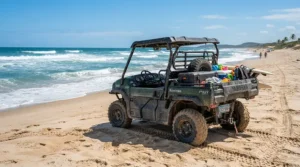
Wetsuit Material Seat Covers for Car: CR, SBR and Neotex Explained
“Wetsuit material seat covers for car” is a phrase that gets thrown around loosely, so let’s decode it. Neoprene is a synthetic rubber, and its foam form is made by injecting nitrogen gas into the material, creating tiny closed cells that block water. That’s the same structure in your wetsuit.
Not all of it is equal, though. CR means chloroprene rubber, the premium-grade stuff. SBR is a cheaper rubber blend often sold under the neoprene label. One premium manufacturer even claims that competitors use “SBR imitation neoprene,” which is a marketing jab worth treating as a claim rather than a fact, but the underlying point stands: the label “neoprene” alone tells you little.
Then there’s Neotex, a fabric used as the outer shell on some covers. Coverking explicitly separates its CR-grade neoprene line from its Neotex-only line, because the latter lacks the neoprene core.
What does this mean for your wallet? If you’re after real wetsuit-grade protection, look for the words “CR” or “chloroprene” and a stated thickness in millimeters. If a listing only says “neoprene-like” or “wetsuit fabric,” assume a thinner, lower-grade build. Wetsuit-style stretch is lovely, but only genuine neoprene gives you the closed-cell moisture barrier.
Water Resistant Seat Covers for Surfers: What Actually Matters
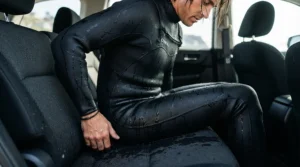
Water resistant seat covers for surfers face a harsher test than the average school-run protector. You aren’t dealing with a spilled coffee. You’re sitting a dripping wet body on the seat, often in a wetsuit, often for twenty minutes before you’ve changed.
Three things matter most. First, thickness. A thicker neoprene layer gives water a longer path, which is why the 5mm builds earn their reputation. Second, seams. Stitched panels are the weak link on any cover, because needle holes can wick moisture. Look for covers with a bonded or fabric-shielded design, and keep in mind that water can still creep through at seams even on a “waterproof” product. Third, backing. Non-slip backing is underrated. A cover that creeps around invites you to adjust it with sandy hands, which grinds grit into everything.
Also check coverage. Seat bottoms take the worst soaking, but seat backs catch the drips from your hair and wetsuit. A bottom-only cover leaves the backrest exposed, and a wet backrest is a classic source of that persistent beach-car smell. For daily use, choose a design that wraps both surfaces.
Saltwater Resistance: What Salt Actually Does to Neoprene
Saltwater resistance is where cheap covers quietly fail. Salt itself doesn’t dissolve neoprene, but repeated exposure combined with sun, heat and drying cycles takes a toll. A recent natural-ageing study of diving neoprene found that thermal resistance declined significantly with ageing and highlighted how seawater exposure alters the material’s structure and mechanical properties over time.
The practical takeaway is that covers wear out gradually, not suddenly. Salt crystals left to dry on the surface can stiffen fabric and abrade stitching. UV is a second culprit, since Wikipedia’s neoprene entry notes that ultraviolet exposure reduces the material’s mechanical properties. That’s a real concern in a parked car, where seats can bake behind glass.
Here’s what that means for you. Rinse the covers with fresh water regularly, ideally after any salty session. Park in shade or use a windshield sunshade when you can. And choose thicker neoprene if saltwater is a weekly event, because the Korean wetsuit-material research above found that thicker material performed better against salt water. Think of rinsing as a thirty-second habit that can add seasons to your covers.
Sand and Sunscreen Protection: The Messy Reality
Sand and sunscreen protection is the unglamorous heart of this whole category. Sand is abrasive, and it works its way into every fold of fabric. Sunscreen is oily, and oils tend to leave residue that attracts more grit.
Neoprene helps because its smooth, closed-cell surface doesn’t absorb liquid sunscreen the way woven upholstery does. Sand also tends to sit on top, where a quick shake or a vacuum pulls it free. Covers with a nylon or jersey skin are easy to brush down, while textured or embossed surfaces can trap grains in their ridges.
A few habits help. Shake the cover outside the car before you vacuum. Wipe sunscreen residue with a damp cloth and a gentle cleaner soon after, since oils left to bake can leave marks. The sensible move is to use manufacturer-recommended cleaners; Wet Okole, for example, recommends wetsuit shampoo designed for neoprene.
Finally, don’t forget the seat belt and center console. Sand finds its way there too, and a cover can’t protect what it doesn’t touch.
Quick Drying Fabric: What Really Dries Fast
Quick drying fabric is the feature most buyers assume, and fewer verify. Closed-cell neoprene foam doesn’t absorb water into its core, so the foam itself isn’t what stays wet. The slow part is the fabric skin. A thick, absorbent jersey layer holds moisture like a sponge, while a smooth nylon surface sheds it.
So how quickly a cover dries depends on its outer fabric, the seat shape underneath and the airflow around it. Specific dry-time claims on listings are rarely backed by published tests, so treat them cautiously. A good rule of thumb: if the surface feels like a bath towel, expect it to hold water; if it feels like a smooth wetsuit panel, expect water to bead and run off.
Two tips speed things up. Crack the windows or tilt the sunroof after a wet session so air can move across the seat. And for covers that are removable, pull them out and hang them in the shade. Direct sun is tempting but accelerates UV wear, so shade with a breeze is the better long-term trade.
How to Choose Neoprene Seat Covers for Beach and Surf Days
Choosing the right pair comes down to six checks. Work through them in order.
- Confirm real neoprene. Look for “CR,” “chloroprene” or a stated thickness in millimeters. Vague wording usually signals a thinner lining.
- Pick thickness to match use. Around 3mm suits occasional beach trips, while 5mm suits daily wet entries.
- Decide custom versus universal. Custom covers fit better and often cost several times more, but universal ones suit multiple vehicles.
- Check airbag compatibility. If your seats have side airbags, make sure the cover specifically allows deployment.
- Inspect the backing. Non-slip backing keeps covers from shifting under a wet, sandy driver.
- Read the warranty carefully. Fading is often excluded, so check what’s actually covered.
If you want a shortcut, buy custom if you surf constantly, and universal if you want flexibility. Either way, verify heated-seat compatibility; some neoprene covers can block seat warmth, which some buyers discover too late.
Neoprene vs Leatherette, Cloth and Towels for the Beach
Neoprene is not the only option, so let’s compare it honestly.
| Cover Type | Waterproofing | Sand Cleanup | Comfort When Hot | Best For |
|---|---|---|---|---|
| Neoprene | Excellent | Good | Can feel warm | Surfers, water sports |
| Faux leather | Good | Excellent | Can get sticky | Spill protection |
| Cloth | Poor | Poor | Breathable | Dry commutes |
| Beach towel | Poor | Fair | Breathable | Quick, temporary use |
Neoprene wins on the waterproof metric and holds its own for sand, which is exactly what a beach day demands. Faux leather cleans up beautifully but lacks the cushion and stretch of neoprene, and can feel sticky against bare skin in heat. A towel is the free option, but it soaks through quickly and slides around. If you drive sandy and wet more than a few times a season, neoprene’s extra cost earns its keep.
Long-Term Cost and Maintenance of Neoprene Seat Covers
Here’s the value math. A premium custom set in the $300-$550 range costs far more upfront than a $40-$60 universal pair, but cost per use tells a different story. If a premium set lasts four-plus years of weekly surf sessions, it works out to roughly pennies per session. A budget pair that needs replacing after two seasons costs more over time.
| Tier | Upfront Range | Typical Strength | Typical Weakness |
|---|---|---|---|
| Premium custom | $300-$550 | Fit and thick neoprene | Wait times, price |
| Mid-range universal | $40-$60 per seat | Versatility | Looser fit |
| Budget | $25-$50 | Low risk | Thinner protection |
Maintenance is cheap either way. Rinse with fresh water, use neoprene-safe cleaner, and air-dry in shade. Whether to use a washing machine depends on the manufacturer, because guidance varies, so follow your cover’s care sheet. That small habit protects your investment more than any feature on the spec sheet.
Practical Usage Guide: Setup and Rinse Routine for Surf-Day Covers
A cover is only as good as how you use it. Here’s a routine that can stretch its lifespan.
Installation. Fit the cover with the seat in a neutral position, tuck the edges firmly and secure straps beneath the seat. Check that airbag flaps align with the side of the seat and aren’t pulled tight. Avoid covering any airbag label.
Before the session. Slide a spare towel over the seat back if you’re prone to dripping. It’s a cheap extra layer that absorbs the worst.
After the session. Shake out sand outdoors, then rinse with fresh water when you get home. A garden hose is plenty. Let the covers dry in shade or with the car windows cracked.
Monthly. Wash with a neoprene-friendly soap to remove sunscreen oils and salt residue, then inspect seams for stretching or fraying.
First-30-days mistakes. Pulling straps too tight, skipping the rinse and parking in direct sun all day. Avoid those and your covers should look better for longer.
Real-World Scenarios: Matching Covers to Your Beach Life
Three buyer profiles show how the decision plays out.
The daily dawn-patrol surfer. You’re in the water five mornings a week, and your car is your changing room. A custom-fit Wet Okole Neoprene Seat Covers or Coverking CR-Grade Neoprene Custom Seat Covers set justifies the cost, because the thick, genuine neoprene and tailored pattern handle constant soaking. Budget roughly $300-$550 and plan for the lead time.
The weekend family beach crew. Two kids, a cooler, sandy towels. The back seat takes the worst of it. A full set like the CAROMOP Neoprene Waterproof Seat Covers (around $50 range) covers more surface per dollar, and a wipe-clean surface suits chaos. Pair it with a towel on the seat for extra insurance.
The coastal truck owner. You drive a Silverado or Sierra, and you want a real barrier. The Rough Country Neoprene Seat Covers (around $250 range) are built to that pattern. Check fitment for your exact model and year.
For someone in between, say a college student commuting to the beach a few times a month, the Gorla Gear Premium Universal Neoprene Seat Cover or CAR PASS Neoprene EVA Front Seat Covers offer the best balance.
✨ Don’t Miss These Exclusive Deals!
🔍 Take your beach and surf days to the next level with these carefully selected products. Click on any highlighted item to check current pricing and availability. These covers will help you protect your car and keep every session stress-free!
Frequently Asked Questions
❓ Are neoprene seat covers fully waterproof?
❓ Can I use neoprene seat covers with heated seats?
❓ Do neoprene seat covers block side airbags?
❓ How do I clean sunscreen off neoprene seat covers?
❓ Are neoprene covers worth it for occasional beach trips?
Conclusion: Choose Your Armor, Then Go Surf
Neoprene seat covers for beach and surf days solve a simple problem: you shouldn’t have to choose between a great session and a decent car interior. The right set shields upholstery from salt, sand and sunscreen, and turns post-surf cleanup into a quick rinse.
The decision comes down to how often you get wet. Daily surfers get the most from genuine CR neoprene in a custom fit, like the Wet Okole Neoprene Seat Covers or Coverking CR-Grade Neoprene Custom Seat Covers. Truck owners should look at the Rough Country Neoprene Seat Covers if their model is supported. Most everyone else will do well with the Gorla Gear Premium Universal Neoprene Seat Cover or CAR PASS Neoprene EVA Front Seat Covers, while families can cover more seats with the CAROMOP Neoprene Waterproof Seat Covers. If you only want to test the idea, the Motor Trend AquaShield Front Seat Covers is the cheapest on-ramp.
Whatever you choose, rinse often, park in shade and read the fine print on materials and warranties. Neoprene is a chemically resilient synthetic rubber, but even resilient materials reward a little care.
Recommended for You
- [Add your blog post link 1]
- [Add your blog post link 2]
- [Add your blog post link 3]
Disclaimer: This article contains affiliate links. As an Amazon Associate, I earn from qualifying purchases. If you purchase products through these links, we may earn a small commission at no additional cost to you.
✨ Found this helpful? Share it with your friends! 💬🤗
